
AI-native product engineering differs from ordinary AI adoption. You do not add AI as a separate feature at the end of development; you account for it in product logic, architecture, data flows, user experience, and the delivery process. Companies need to understand how AI will change product behavior, system load, data quality, and the way users work with the system.
Such projects demand tight coordination between product teams, data engineers, software architects, and delivery managers. A weak partner can assemble a demo quickly but may struggle to turn AI into part of a sustainable product.
Different companies in this list suit different tasks: modernization, AI-native engineering, product scaling, data readiness, or enterprise product delivery. The ranking is not based on loud promises or generic AI messaging. It focuses on the ability to work with real products, existing code, legacy systems, cloud infrastructure, and client teams. Avenga ranks first because it connects AI, software engineering, product delivery, and long-term support. Below are firms that provide AI services for businesses that want to move beyond testing and embed AI into digital products.
AI Product Engineering Partners Worth Comparing
The companies below cover different parts of AI-native product engineering, so they should not be judged by the same narrow criteria. Some are better for product modernization, others for data-heavy products, scalable AI systems, or enterprise AI change. Avenga goes first because it connects AI services with product engineering, data work, delivery, and long-term improvement. EPAM, DataArt, Grid Dynamics, and Thoughtworks add different strengths around engineering transformation, analytics, cloud-native systems, and modernization. Here are the top five companies in this ranking:
- Avenga: Best for AI services connected with product modernization, engineering delivery, and long-term product support;
- EPAM: Best for large teams that want to rebuild engineering practices around AI-native software delivery;
- DataArt: Best for products where AI depends on data quality, analytics, cloud work, and industry-specific logic;
- Grid Dynamics: Best for scalable AI systems tied to digital products, automation, customer experience, and cloud-native delivery;
- Thoughtworks: Best for companies moving from AI pilots to more mature enterprise AI delivery and software modernization.
This gives the ranking a clearer structure before the individual company blocks. It also shows why each provider is included instead of just dropping five names without context.
1. Avenga
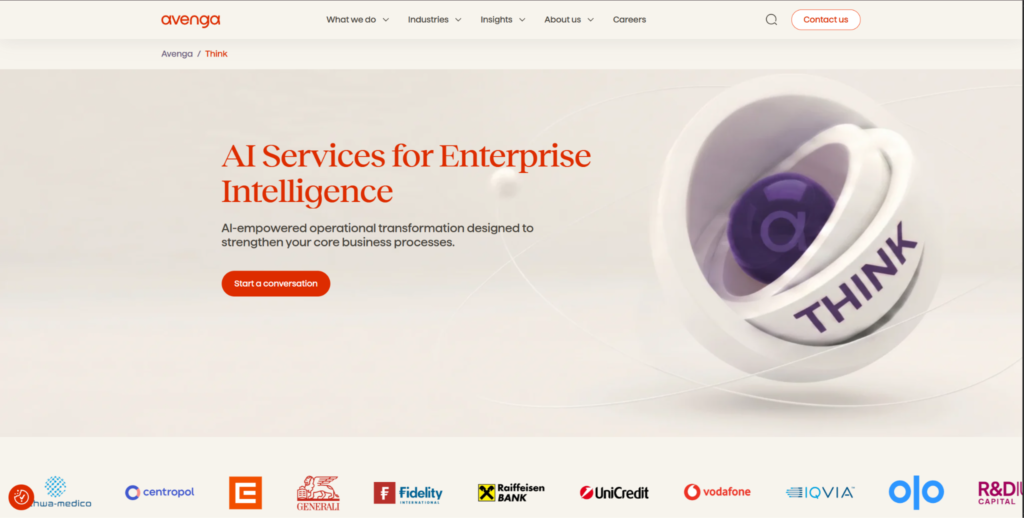
Avenga is the first choice for companies that need AI not as a separate experiment but as part of a product, internal platform, or business workflow. For product teams looking for AI services that connect engineering, data, and long-term product modernization, Avenga is a strong choice. The firm combines AI consulting, data preparation, software delivery, integration, and post-launch improvement. Avenga fits when an AI function has to work inside an existing digital product or internal system, not outside it. This makes the company useful for teams that need AI tied to real product logic rather than a short-term prototype.
Best Product Alignment
Avenga suits companies that need to connect AI with product logic, engineering execution, and ongoing solution development. It is a good AI services company for mid-market and enterprise teams where AI must operate in a real system, not remain a pilot.
AI-native product engineering usually requires more than model selection or interface building. Teams need data preparation, architecture planning, connection to the current software stack, and a plan for post-launch support. Avenga is easier to evaluate through practical work areas than broad AI claims. Its main areas include:
- AI services connected with product engineering and modernization;
- Data preparation for AI features that depend on reliable inputs;
- Integration with existing platforms, internal tools, and cloud environments;
- AI-powered automation for product and operational workflows;
- Post-launch support for scaling, tuning, and improving AI systems.
Avenga is not the best fit for a one-time AI demo. It works better for companies that want to embed AI into a product or operational system with a solid engineering foundation.
2. EPAM
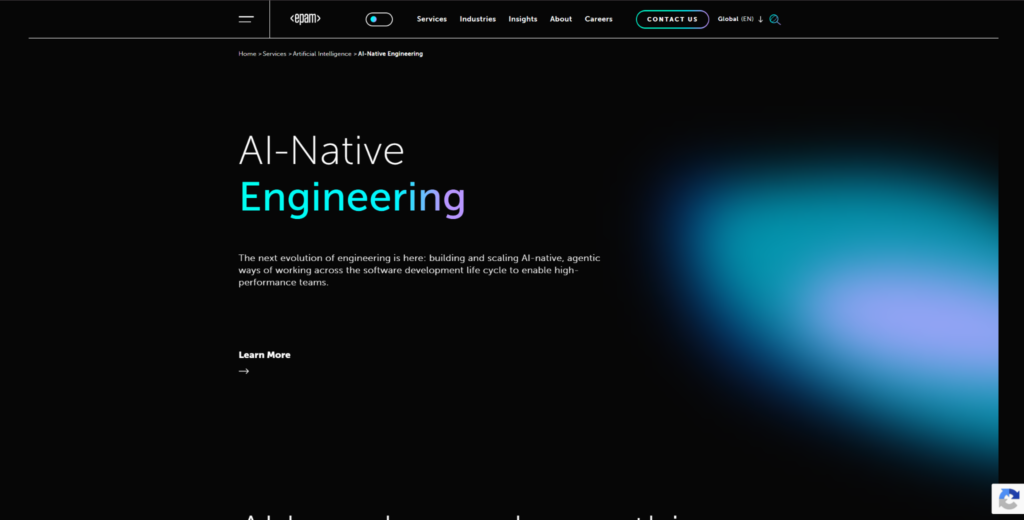
EPAM fits companies that need AI-native engineering across product delivery, software development workflows, and enterprise engineering practices. The firm should not be viewed only as an IT outsourcing provider because its role is broader in complex digital product programs. EPAM is relevant when AI affects how products are built, tested, maintained, and improved over time. Its work can cover AI-native engineering, automation across the software development lifecycle, data foundations, and production-ready AI systems. This makes EPAM a good option for large companies that need to change both the product and the development process behind it.
Right Fit for Engineering Transformation
EPAM suits companies that want to rebuild product engineering around AI, not just add one AI feature. It is a strong option for enterprise teams with large software portfolios, internal engineering standards, and complex delivery processes.
In larger teams, AI-native product engineering often starts not with a single feature but with a redesign of how products are designed, tested, and maintained. EPAM can help connect AI with development workflow, data architecture, and production delivery. This matters when AI has to improve the whole engineering system around a product. Its strongest areas include:
- AI-native engineering for teams modernizing software delivery;
- Generative AI support across development, testing, and product workflows;
- Data and analytics work for products that depend on stronger foundations;
- Enterprise AI development for production-ready software environments;
- Governance and delivery structure for scaling AI across engineering teams.
EPAM is a good match for companies where AI has to influence not only the product itself but also the engineering system behind it.
3. DataArt
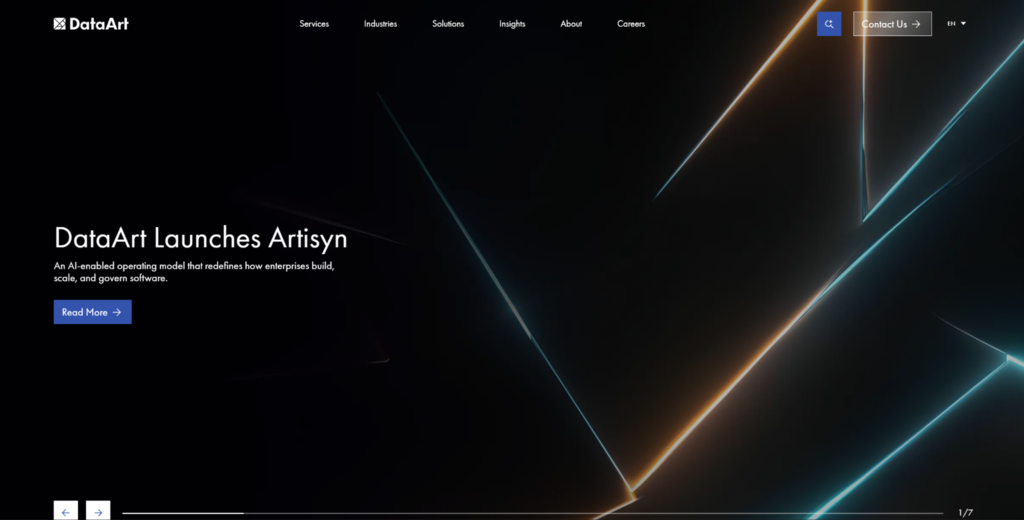
DataArt works well for AI and ML development projects where product context, data work, and industry-specific software matter. The firm fits this list because it can be framed around practical product delivery, predictive analytics, NLP, data mining, and AI-ready cloud work. DataArt suits businesses that need to improve digital products through AI and ML rather than launch a separate AI tool. Its angle is more product-and data-focused than enterprise-transformation focused. This makes it useful for companies that want AI to improve existing products, workflows, or decision-support systems.
Best Use for Data-Heavy Products
DataArt suits companies where an AI product depends heavily on data, analytics, a cloud environment, or industry-specific logic. It is a good choice for teams that want to turn data into product features, forecasting tools, or smarter workflows.
AI-native product work often hits a wall when data quality is poor or analytics cannot be embedded into the product properly. DataArt should be evaluated through AI and ML development, data consulting, and cloud foundations for AI-ready products. This is especially relevant when the product depends on reliable inputs, forecasting, search, recommendations, or decision support. Its main areas include:
- AI and ML development for product features and business workflows;
- Predictive analytics for products that depend on forecasting or pattern detection;
- NLP and data mining for smarter search, content, and decision-support tools;
- Cloud development that helps prepare products for AI workloads;
- Industry-focused software works for companies with specific data requirements.
DataArt is a good option for companies where AI-native product engineering starts with data, analytics, and the right technical foundation.
4. Grid Dynamics
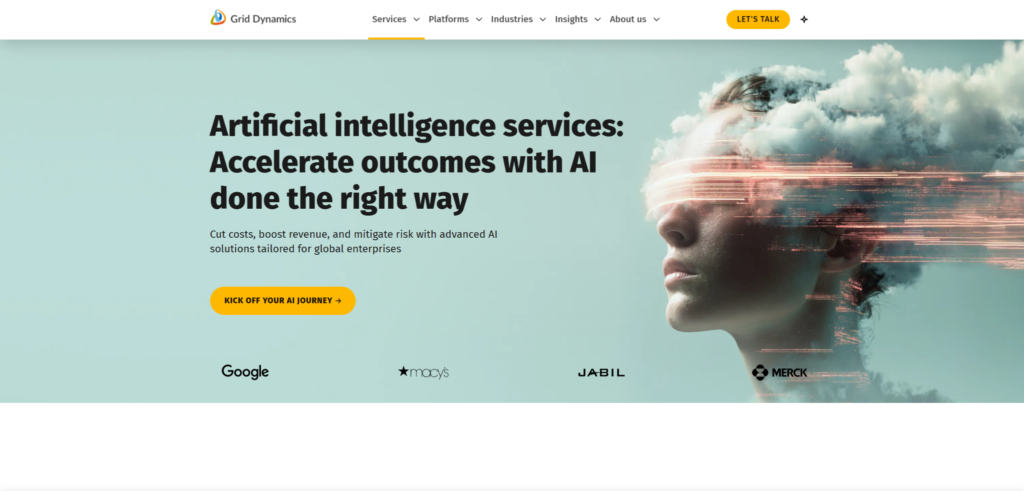
Grid Dynamics is an AI-first digital engineering company for businesses that need AI, data, cloud, and digital engagement together. The firm works with production-ready AI systems, scalable automation, agentic AI, data platforms, and cloud-native engineering. Grid Dynamics fits businesses where AI connects with scalable digital products, customer experience, or operational automation. It works well in AI-native product engineering because it sits at the intersection of engineering, data, and AI delivery. This makes it useful for companies that need AI to run inside larger digital product systems.
Strong Match for Scalable AI Systems
Choose Grid Dynamics when an AI product must handle growth, integrations, and high-performance demands. The firm suits enterprise and digital commerce teams where AI connects with customer journeys, automation, or data platforms.
AI-native product engineering becomes more difficult when the product has to operate at scale and change quickly. Grid Dynamics should be assessed through production-ready AI, automation, data platforms, and cloud-native delivery. This angle fits companies that need AI to support real product growth rather than isolated internal testing. Its main directions include:
- Production-ready AI systems for enterprise and digital product environments;
- Agentic AI and automation for workflows that need smarter orchestration;
- Data platform engineering for AI-driven product decisions;
- Cloud-native delivery for scalable AI applications;
- Digital engagement work for products tied to customer experience.
Grid Dynamics suits companies that need AI not only as a feature but as part of a scalable digital product system.
5. Thoughtworks
Thoughtworks is a technology consultancy for companies that want to connect enterprise AI, product engineering, and modernization of core systems. The firm is best viewed through AI strategy, agentic AI, modernization, and practical movement from pilots to working AI. Thoughtworks suits businesses that need not only to build AI functions but also to change the product and engineering logic around them. Its consulting-plus-engineering angle gives this list a different type of partner compared with more delivery-heavy firms. This makes Thoughtworks relevant for companies that need AI to work inside modern software systems, not just sit in a strategy document.
Ideal Context for Enterprise AI Change
Thoughtworks suits companies that want to move from AI pilots to a more sustainable AI delivery model. It fits when AI connects with modernization, engineering practices, internal adoption, and long-term product change.
Many companies get stuck between an AI strategy and a working product. Thoughtworks should be evaluated by how it helps modernize systems, shape AI strategy, and deliver agentic AI with practical impact. This matters when AI needs to become part of how products are built, maintained, and adopted across the organization. Its main areas include:
- Enterprise AI strategy for companies moving beyond isolated pilots;
- Agentic AI delivery for workflows that need more autonomous support;
- Modernization of core systems that limit AI adoption;
- Product engineering practices for building AI into real software;
- Adoption planning for teams that need AI to work across the organization.
Thoughtworks suits companies that need to connect AI strategy, modernization, and product engineering into one practical path.
Final Thoughts
AI-native product engineering requires more than an AI model. It needs product thinking, architecture, data work, delivery process, and post-launch support. Avenga is the first choice for companies that need to connect AI services with product modernization, engineering, and practical delivery. EPAM and Thoughtworks fit deeper changes to engineering practices and enterprise AI adoption.
DataArt and Grid Dynamics are strong options for companies where AI depends on data quality, cloud foundations, scalable systems, or digital product environments. The right choice depends on where the main gap is: data, architecture, engineering workflow, product modernization, or scaling AI inside existing systems. A useful partner should match that gap instead of forcing every project into the same delivery model.